

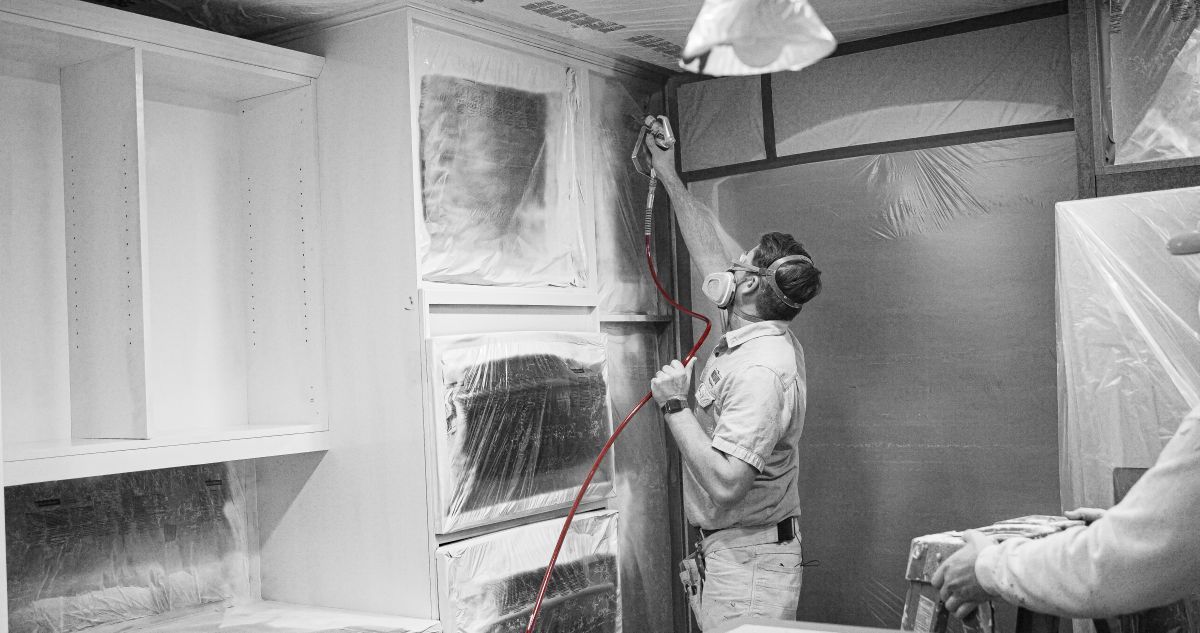
Fine finish work requires a smooth, consistent glass-like finish that leaves a lasting impression. While some painters only associate airless sprayers with production work like house exteriors, today's electric airless sprayers have proven they can consistently deliver the high-quality finish required for cabinets, paneling, doors, trim, and more.
If you're running solo, growing a small crew, or adding fine finish to the services you already offer, it's worth understanding why airless sprayers have earned their spot in this kind of work, what separates a premium sprayer from an entry-level one, and which projects they’re actually built for.
At a Glance
- Airless sprayers are proven to produce smooth, professional-quality fine finishes
- Tip sensing technology delivers consistent flow and fan pattern performance which gives consistent mil thickness to the entire surface
- Fine finish tips provide excellent atomization and reduced overspray while using lower pressure
- Faster application speeds increase jobsite productivity
- Shorter learning curve in comparison to more complex HVLP, AirSpray, or Air Assisted Airless systems, helping crews become productive more quickly
Table of Contents
- Why Airless Sprayers Work for Fine Finish
- What to Look for Under the Hood of a Fine Finish Sprayer
- How Airless Sprayers and Fine Finish Tips Work Together
- Preventing Cross-Contamination When Running Multiple Coatings
- Where Airless Sprayers Get Used for Fine Finish
- Tips for Trying Fine Finish for the First Time
- FAQs
- Why Airless Sprayers Belong in Your Fine Finish Toolkit
Why Airless Sprayers Work for Fine Finish
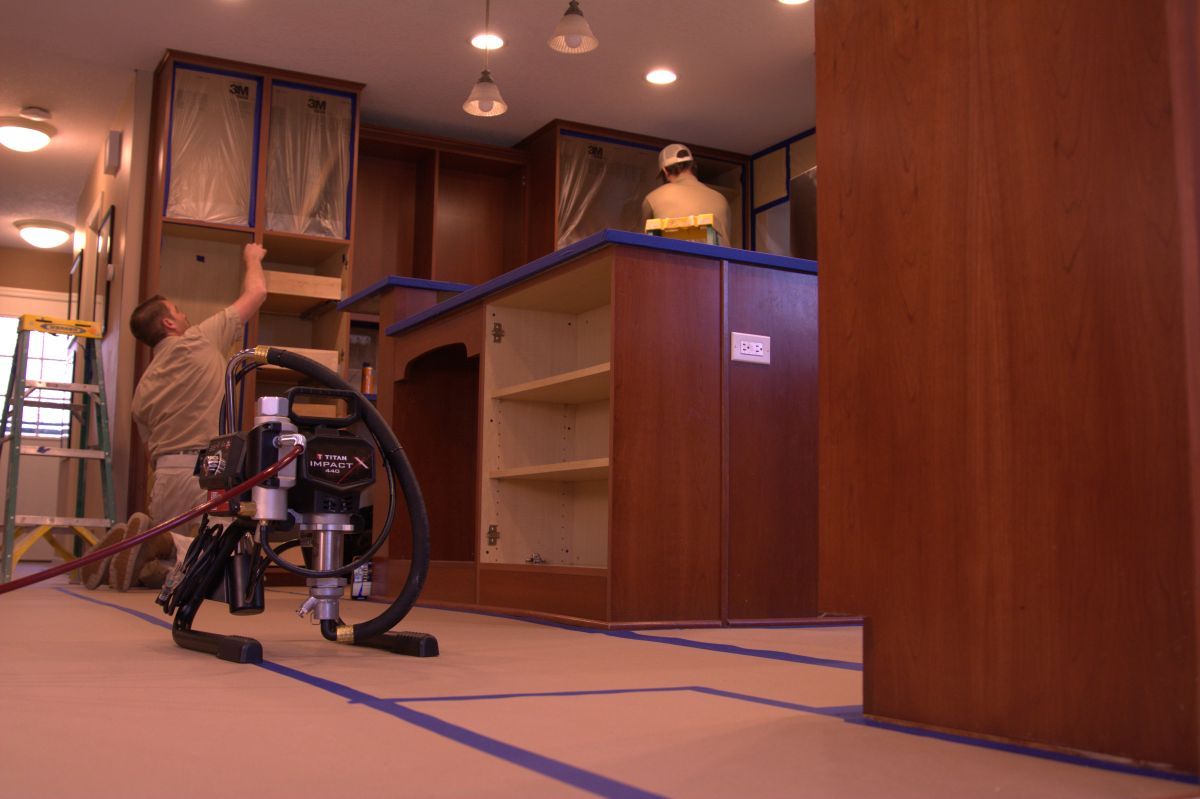
The biggest advantage of airless spraying is productivity. Compared to other fine finish systems, electric airless sprayers apply coatings significantly faster, which means painters can complete more work without sacrificing finish quality. That translates into shorter project timelines, higher efficiency, and better profitability.
Airless sprayers are also easier to learn. Their straightforward operation lets newer painters become productive quickly, without the mixing, thinning, and pattern adjustments that come with more specialized systems like HVLP or air-assisted airless. That's a real advantage for contractors bringing on new crew members or adding new services without wanting to start from scratch.
Professional painters don't have to choose between finish quality and productivity. Modern airless sprayers deliver both, producing premium finishes while helping crews work faster and more efficiently.
What to Look for Under the Hood of a Fine Finish Airless Sprayer
Not every electric airless sprayer is built for fine finish. The difference comes down to the technology inside the machine. Take the Titan Impact X 440 as an example. Its premium features were built for control and a quality finish.
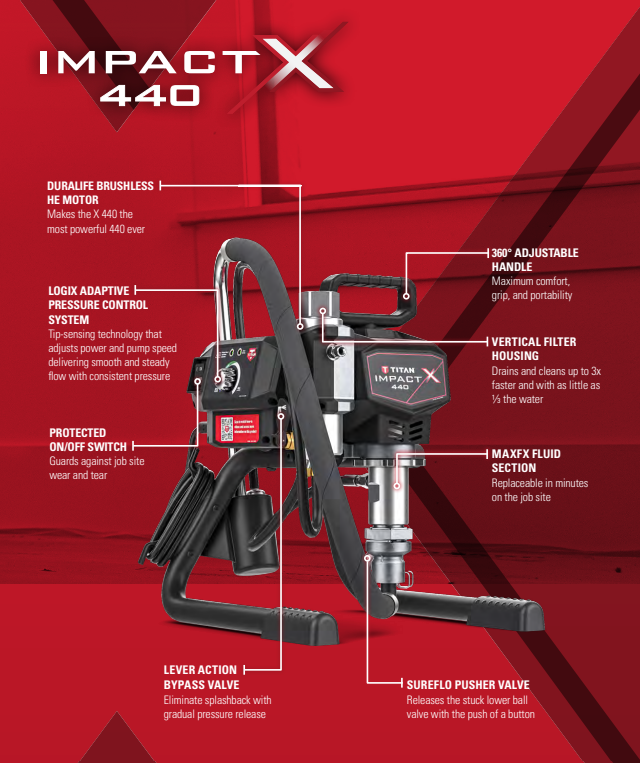
Logix ™ Adaptive Pressure Control System
Logix is tip sensing technology that adapts to the tip size you're using and adjusts pump speed to match it, running slower for smaller tips and faster for larger ones. The result is a steady, even stream of paint and pressure, which keeps your fan pattern consistent from the first stroke to the last.
DuraLife ™ Motor HE Brushless Motor
Paired with Logix, the DuraLife motor provides the power behind that consistency, helping the sprayer maintain steady pressure and nearly eliminate deadband; the momentary drop in pressure between pump strokes that can cause surging. Allowing you to feel confident that you'll get a smooth finish on each of your projects.
Sureflo ™ Pusher Valve
The Sureflo Pusher Valve supports smooth, reliable priming and operation, helping the sprayer perform consistently pull after pull.
MaxFX ™ Fluid Section
The MaxFX Fluid Section is built for durability and consistent output over the life of the sprayer, so performance doesn't drift as the machine racks up hours.
Slow Release Prime Spray Valve with Diffuser
This valve releases pressure gradually when switching from prime to spray, and the diffuser on the end helps control that release. It's a small detail that reduces mess and makes transitions smoother.
Quad+™ Self-Adjusting Packings
Packings naturally wear over the life of a sprayer. Quad+ Packings™ automatically adjust as that wear occurs. This helps maintain a tight seal without manual adjustments. They also wipe abrasive coatings clean during operation. This helps protect the piston and main sealing lip from damage. The result is consistent spray performance, less maintenance, and a longer pump life.
WearGuard 4-Year Warranty
The Impact X 440 is backed by the WareGuard 4-year warranty, a year longer than the standard 3-year coverage typical of pro sprayers.
None of these features do the work alone. Together, they give you a sprayer that holds a consistent pressure and pattern, which matters just as much for fine finish work as the tip you put on it.
Ready to see the specs for yourself? Explore the Impact X line.
"It's the perfect porridge, not too much, not too little. I can use it for everything, even fine finishes, and that's what's incredible to me." - Asha Bezanson, Lotus Painting Co.
How Airless Sprayers and Fine Finish Tips Work Together
The sprayer is only half the equation. The key to fine finish results is pairing a sprayer with tip sensing technology, like Logix, with a purpose-built fine finish tip. Consistent coating flow and pressure eliminates surging between pump strokes, while a fine finish tip creates a softer fan pattern for a smooth, professional appearance. That combination gives painters more confidence when working on detailed projects. From moulding to cabinets, better atomization and a consistent fan pattern help coatings level more evenly, which means less time correcting drips or orange peel and more time moving on to the next job.
Preventing Cross-Contamination When Running Multiple Coatings
One aspect of the job that often gets overlooked is how painters manage multiple coatings at once. Asha Bezanson of Lotus Painting Co. runs a small crew that regularly works with latex, oil primer, and color, and her solution is to dedicate a sprayer to each type of coating. Before her business partner Alli joined, Asha ran two sprayers on her own, one for latex and one for oil primer. Once they added a third for color, the original latex sprayer became dedicated to white latex only. Between the three, they no longer worry about cross-contamination.
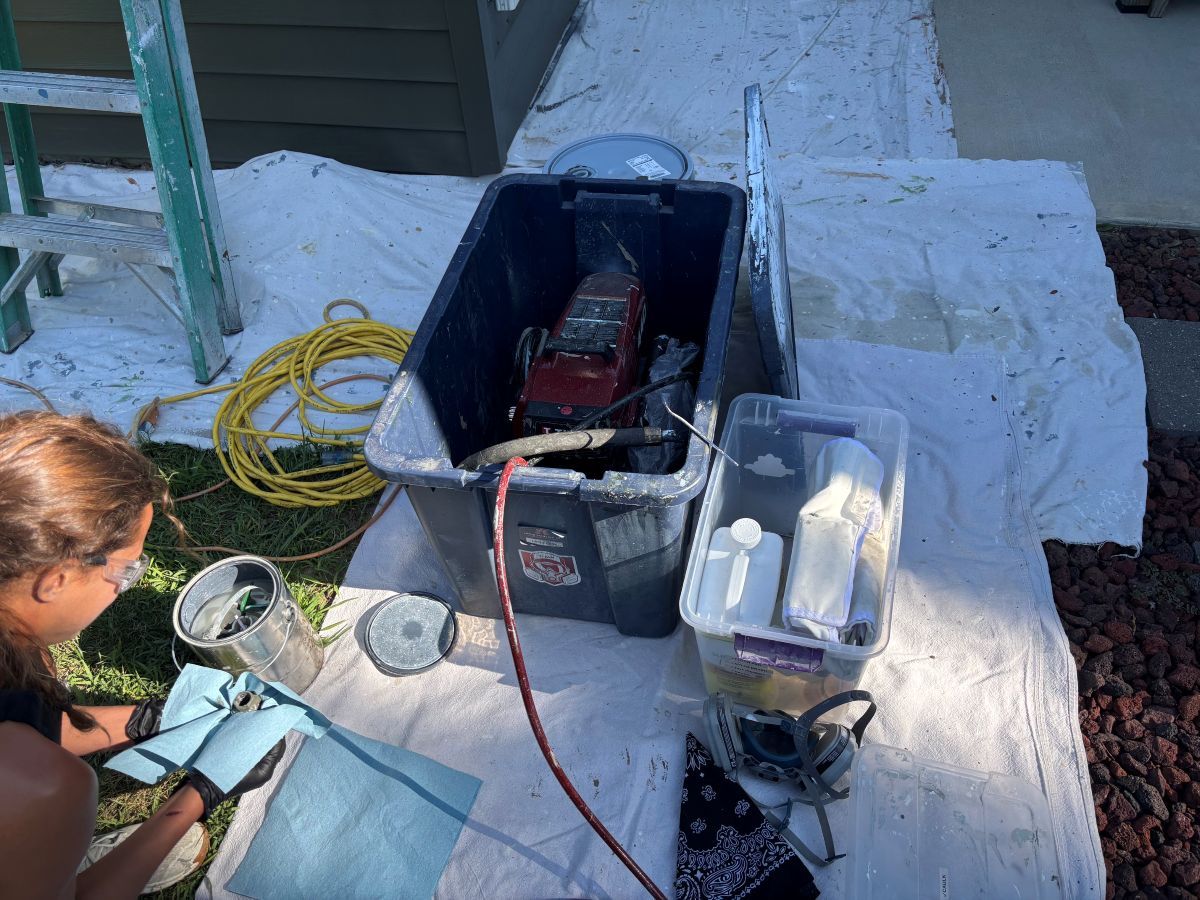
That same logic extends to specialty coatings. Asha's team uses a FlexSpray Pro 18V for detailed lacquer work rather than risk introducing a fourth variable into their regular rotation. As she put it, "it's not that the 440 can't handle lacquer, it's that I don't want to risk cross-contaminating any of the three coatings we already run through our regular sprayers. Fewer variables means fewer chances for something to go wrong."
It's a simple habit, but a useful one for any painter running more than one finish type. A versatile sprayer like the Impact X 440 can absolutely handle multiple coatings, but keeping a dedicated sprayer per coating removes a variable you don't need to manage.
Where Airless Sprayers Get Used for Fine Finish
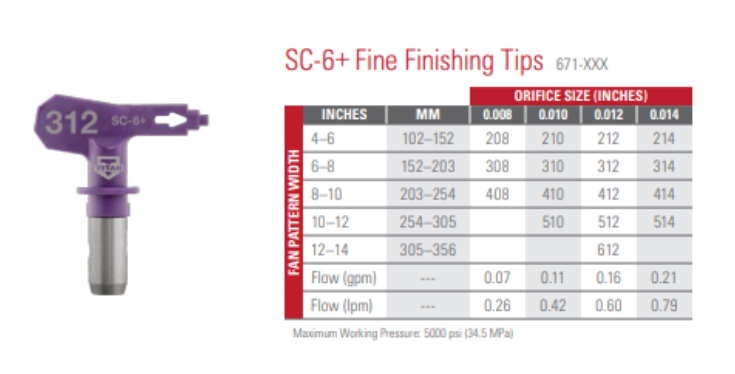
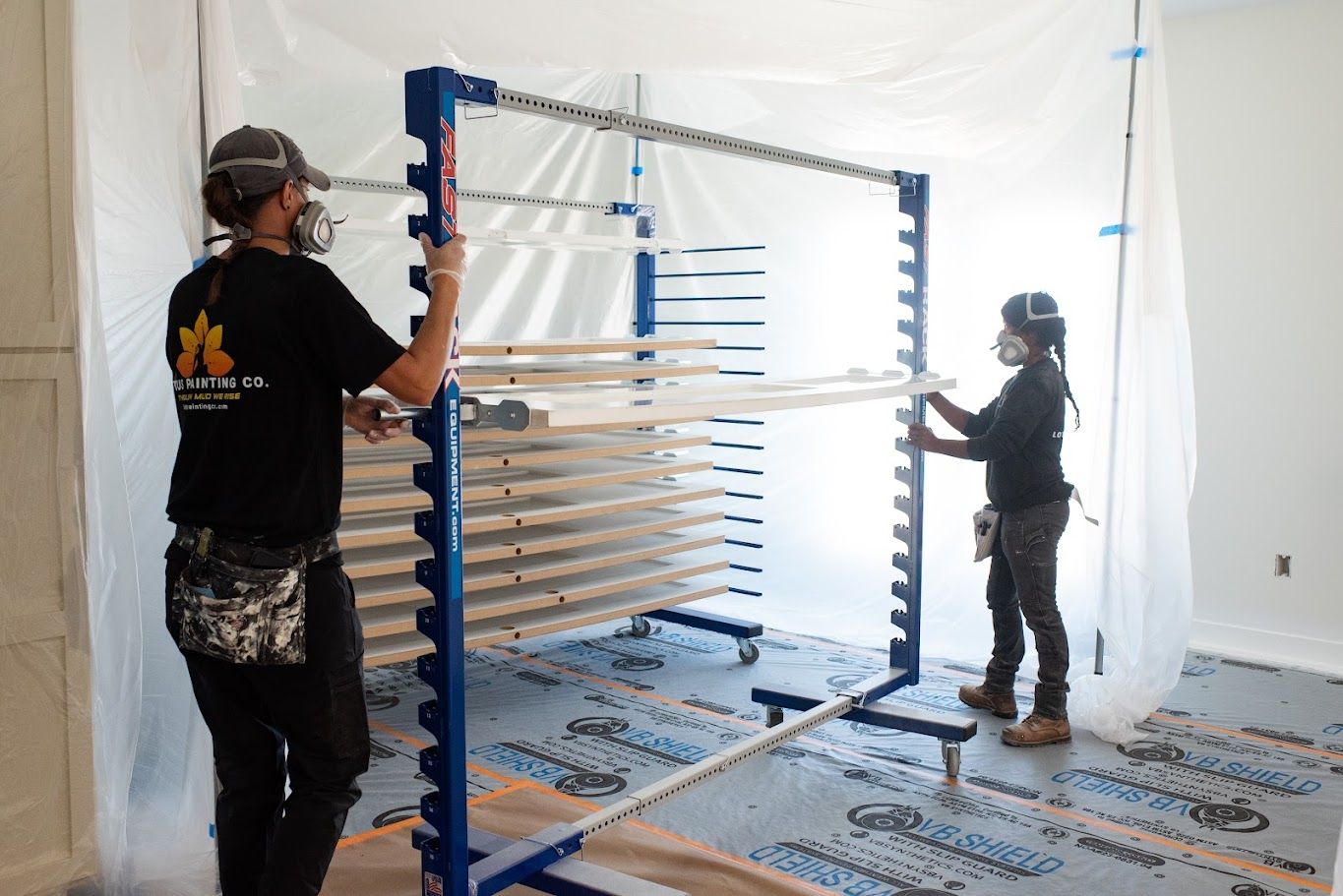
Cabinet refinishing is one of the most popular fine finish applications, and it's where the combination of a premium sprayer and fine finish tip really shows up. Asha's crew methodically disassembles cabinet doors and drawer fronts, brings them back to a dedicated finishing site, and sprays them in the horizontal position, one side at a time, using two topcoats with a 210 or 310 tip.
Beyond cabinets, the same setup works well for:
- Doors: Consistent atomization helps produce an even finish on both flat and paneled doors.
- Furniture refinishing and restoration: A softer fan pattern is well suited to smaller, detailed surfaces.
- Wood paneling: Even coverage across large, visible surfaces reduces the chance of lap marks or texture.
- Trim work: Precise control helps keep lines clean on narrow surfaces.
It's worth being clear that no single sprayer is the right tool for every job. But for these fine finish applications, an electric airless sprayer paired with the right tip is a proven, professional-grade option.
What Pro Painters Are Saying
Asha describes the appeal of the Impact X 440 simply, "It's the perfect porridge, not too much, not too little. I can use it for everything, even fine finishes, and that's what's incredible to me. That something built like such a beast can also turn around and be so fancy when it needs to be." That kind of range is exactly the balance a versatile fine finish sprayer should strike.
Tips for Trying Fine Finish for the First Time
If you're picking up fine finish work for the first time, Asha's advice comes from years of hands-on experience running multiple sprayers on real jobsites:
- Learn your machine: Know how to reset and clean it before starting a fine finish project.
- Dial in your pressure: Always test your pattern on paper first before you spray a surface that matters.
- Keep your posture, hand speed, and distance consistent: Asha describes it as feeling almost robotic. That consistency is what gives you a finely tuned pattern.
- Watch your spray tips: Tips can become worn out with enough use, and when they do, you'll start to see tails in your spray pattern. That's not the machine failing; the tip has simply lived its life and needs to be swapped.
- Take care of your machine like any tool you depend on: Clean around the orifices and guard with something like a dental pick, and flush and reset between projects every time. This ensures the machine is ready to go the next time you pick it up.
FAQs
Why use a hopper instead of a siphon for fine finish work? A hopper is ideal for fine finish work because you can spray with much smaller amounts of coating. A siphon hose needs quite a bit of material just to fill the hose, while a hopper needs very little. The result is faster priming, less material waste, and a much quicker cleanup.
What tip size should I use on a narrow surface, like a cabinet door rail? A 210 or 212 spray tip is ideal. The first number indicates fan width, so these tips produce a 4-inch spray pattern when held 12 inches from the surface, giving you better control and reducing overspray.
What tip gives me the best control? A 310 or 312 spray tip. This tip provides finer atomization, lower flow, and more control on detailed trim or furniture.
What accessories do I need to get started with fine finishing when using an electric airless paint sprayer? A hopper, fine finish tip, and an extra fine mesh gun filter turns the Impact X 440 into a dedicated fine finish setup.
Do I need to thin my paint to use the Impact X 440? No. You can adjust pressure for a clean fan pattern instead.
Is the Impact X 440 a good fit if I'm just adding fine finishing to my services? Yes. It's a versatile pro sprayer with premium features that will grow with you.
Why Airless Sprayers Belong in Your Fine Finish Toolkit
Achieving a quality fine finish requires more than luck. It comes down to pairing the right sprayer with the right tip, understanding your equipment, and building good habits like dialing in your pressure before spraying. An airless sprayer built with fine finish in mind, like the Impact X 440, gives painters the consistency and control that this kind of work requires. Whether you're running solo, growing a small crew, or adding fine finish to your current offerings, this is a category worth taking seriously.
Ready to add versatility to your paint sprayer lineup? Find a Titan dealer and see the Impact X 440 in action.
Our Featured Expert
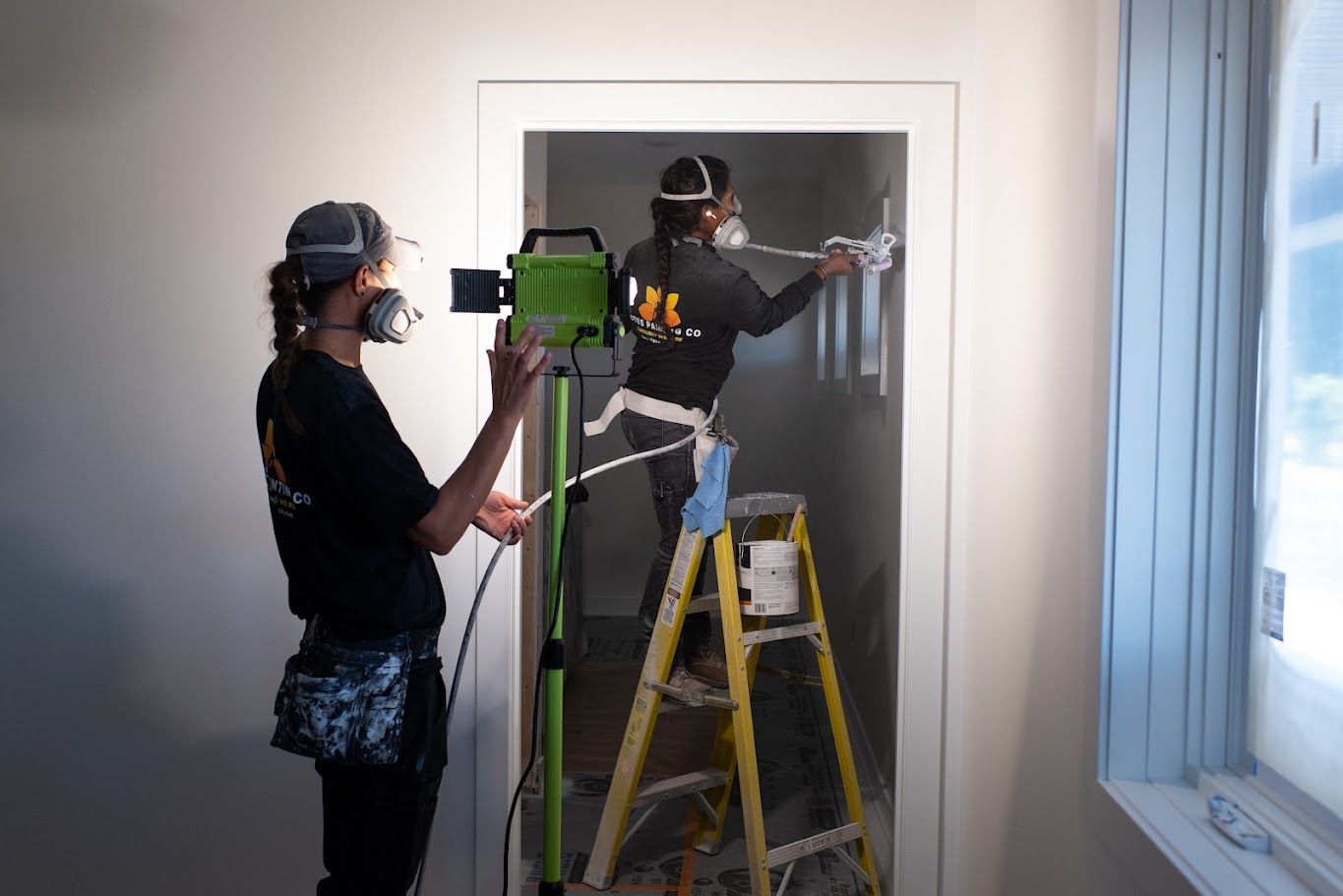
A special thank you to Asha Bezanson for providing expert insights for this article. She is the owner-operator of Lotus Painting Co., founded in her hometown of Morris, MN in 2019 and run alongside best friend and business partner Alli. Known for meticulous prep work and flawless cabinet and trim finishes, Lotus is expanding this year — wintering in Arizona and the Black Hills and working in Minnesota through summer and fall.